
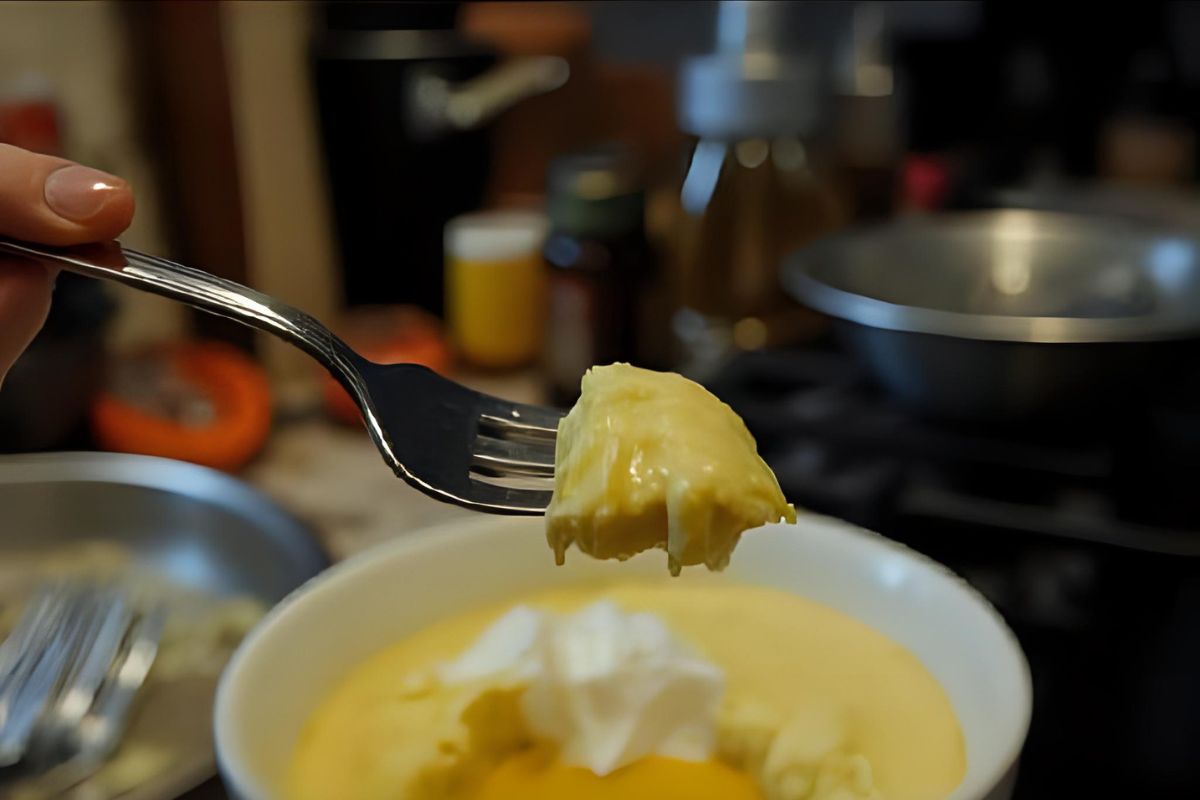
For several weeks now, an extraordinary trend has been causing a stir: people, especially teenagers and young adults, are gathering in parks, public squares, or city centers to eat pudding together —not with the designated spoon, but with a fork. This absurd ritual, which at first glance appears to be a spontaneous social media whim, has developed into a nationwide phenomenon in an astonishingly short time. Yet, this seemingly senseless act reveals a deeper social significance: the need for community, belonging, and a collective moment of unconventionality.
Origin and distribution
The trend originated in southern Germany. At the end of August 2025, an inconspicuous flyer appeared in Karlsruhe, bearing the simple phrase: “We eat pudding with a fork.” Without context, without advertising , without explanation. A few days later, local social media pages shared the motif, and the idea spread via TikTok. At first, it seemed like just a funny activity, a joke among friends. But the response was tremendous. Hundreds of young people gathered for the first meeting in Karlsruhe, all equipped with pudding cups and forks.
Shortly thereafter, the idea was picked up in other cities. Similar gatherings took place in Hanover, Berlin, Munich, and Hamburg. In Berlin, in particular, the event developed into a veritable happening: Several hundred people gathered in James Simon Park to pierce pudding together and film the event. Within a few days, TikTok was full of videos of people laughing, cheering, and winking as they celebrated this new way of eating.
The fascinating thing about this movement is its self-organization. There’s no central leadership, no official group, no familiar faces driving the trend. It spreads organically via hashtags, shared videos, and comments. People who have never met before recognize themselves in this absurd ritual.
The process of a pudding-with-fork meeting
The structure of such a gathering is always similar. All participants bring their own pudding and a fork. They gather at an agreed-upon time—usually in parks or public squares. Before the actual meal begins, there is often a countdown. Then everyone simultaneously pierces their pudding cups. This collective, almost choreographed action has something of a symbolic quality.
The pudding-eating itself becomes a mixture of fun, competition, and social interaction. Many film themselves, laugh at the inevitable failure when the pudding slides through the tines of the fork, or attempt, with exaggerated seriousness, to use the fork as a suitable tool. Some come in groups, others alone – but at the very latest, when they share the pudding-cutting, strangers become a temporary community.
Why pudding – and why with a fork?
The deliberate absurdity is part of the fascination. Pudding is a soft, slippery dessert traditionally eaten with a spoon. A fork is completely unsuitable for it. It’s precisely this disparity that creates its appeal. The trend plays with everyday expectations and reverses them.
In psychology, such actions are referred to as performative disruption: a familiar behavior is deliberately disrupted to generate attention, humor, and community. The choice of the fork as a tool creates a senseless yet unifying act. All participants share the same failure, the same absurdity.
Another reason for its popularity is the low barrier to entry. Anyone can participate, as a pudding and a fork cost next to nothing. The activity is simple, harmless, and can be implemented immediately. It requires no preparation or organization—just the will to participate.
The social dimension of the trend
Behind the comedy lies a deeper social dynamic. Young people live in a time of constant digital overstimulation, economic insecurity, and increasing isolation. Many are looking for ways to temporarily escape this heaviness. The pudding-with-a-fork trend fulfills precisely this function: It allows for shared laughter at the absurd, a collective game without a goal.
Such events create a counterpoint to the rationalized world. In a society that constantly demands performance, efficiency, and self-optimization, the seemingly meaningless becomes an act of liberation. The shared nonsense becomes a moment of authenticity. Participants enjoy the community without necessarily resulting in a product, success, or purpose.
Furthermore, a phenomenon that could be called “social micro-escape” is evident here: a brief, harmless break from routine that has no lasting consequences but creates a sense of belonging. The young people feel like they are part of a movement that requires no rules but still conveys shared values—humor, spontaneity, and openness.
Psychological and cultural significance
The fork in the pudding is not only a symbol of fun, but also a silent protest against the over-regulation of everyday life. Eating dessert with unsuitable tools becomes a symbol of a generation that no longer wants to measure itself against conventions. The act says: We do what brings us joy—even if it doesn’t make sense.
There’s a certain irony in this attitude, but also seriousness. The need for lightheartedness is real. After years of societal crises—pandemic, inflation, climate debates, political uncertainty—there’s a desire to celebrate the senseless, at least for a moment. Pudding becomes the medium of a cheerful revolt.
The media component is also interesting: Sharing the videos on TikTok is an essential part of the ritual. Here, the digital space is understood not as a replacement, but as an extension of the physical encounter. The real event and its digital representation merge. The video proves participation, makes it visible, and multiplies it. This creates a cycle of resonance: The more people film themselves, the more others want to be part of it.
Berlin as a stage of the collective absurd
Arguably the largest event of its kind took place in Berlin . James Simon Park became the scene of an unusual gathering. People sat on blankets, laughed, held their forks aloft, and counted down together before digging into their puddings. For one afternoon, the park transformed into a celebration of carefreeness.
The scene seemed both surreal and familiar: young people who rarely meet experienced a moment of true closeness. The pudding became a bond between strangers. For many, the gathering was more than just fun—it was a reminder that community doesn’t always need a purpose.
Criticism and controversies
Naturally, such a movement isn’t without criticism. Some observers see the trend as an expression of youthful superficiality. They accuse participants of defining themselves through senseless actions rather than engaging with serious issues. Others criticize the resulting trash in parks or the resulting disorder.
But such objections fall short. Eating pudding with a fork makes no claim to social relevance. This is precisely its strength. It is a conscious rejection of seriousness—a play with the everyday that creates its own form of meaning. The trend reminds us that not everything in life has to serve a purpose to be valuable.
What remains
Whether the trend will last is questionable. Many such phenomena disappear as quickly as they came. But for now, it shows how easy it is to create a sense of collective belonging through a simple, absurd idea. Perhaps that’s what’s truly remarkable: people don’t need a grand ideology to feel connected—sometimes all it takes is a fork, a cup of pudding, and the shared will to do something unusual.
Eating pudding with a fork is thus more than just a TikTok trend. It’s an expression of an attitude that celebrates the everyday, embraces the senseless, and savors the moment. It represents a generation that has learned to view itself and its world with irony without losing its sense of community. The pudding may slip off the plate, the fork may fail – but therein lies the magic of this collective game.